Granola
Gut Check Your Questions
What is Kashi Gut Health Granola?
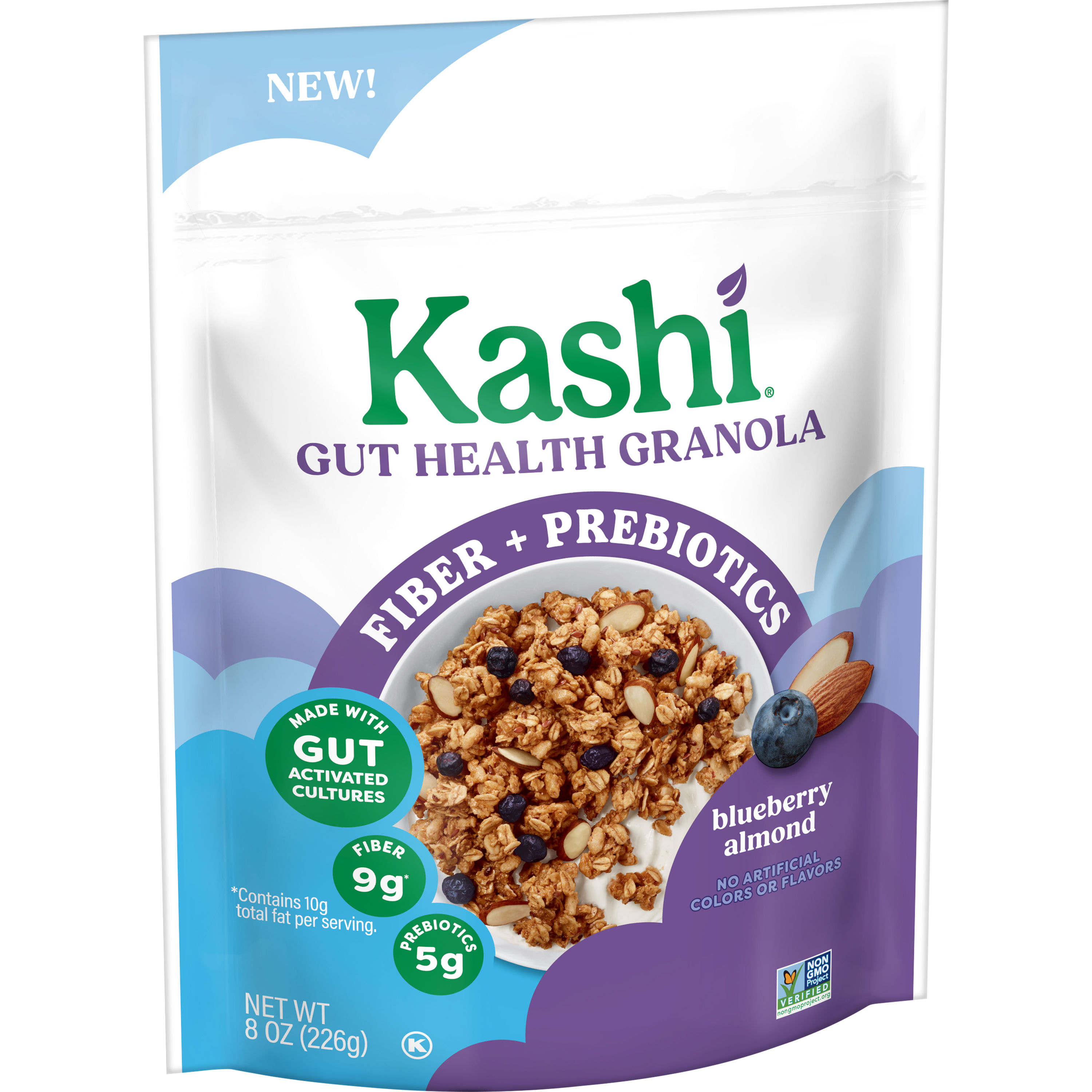
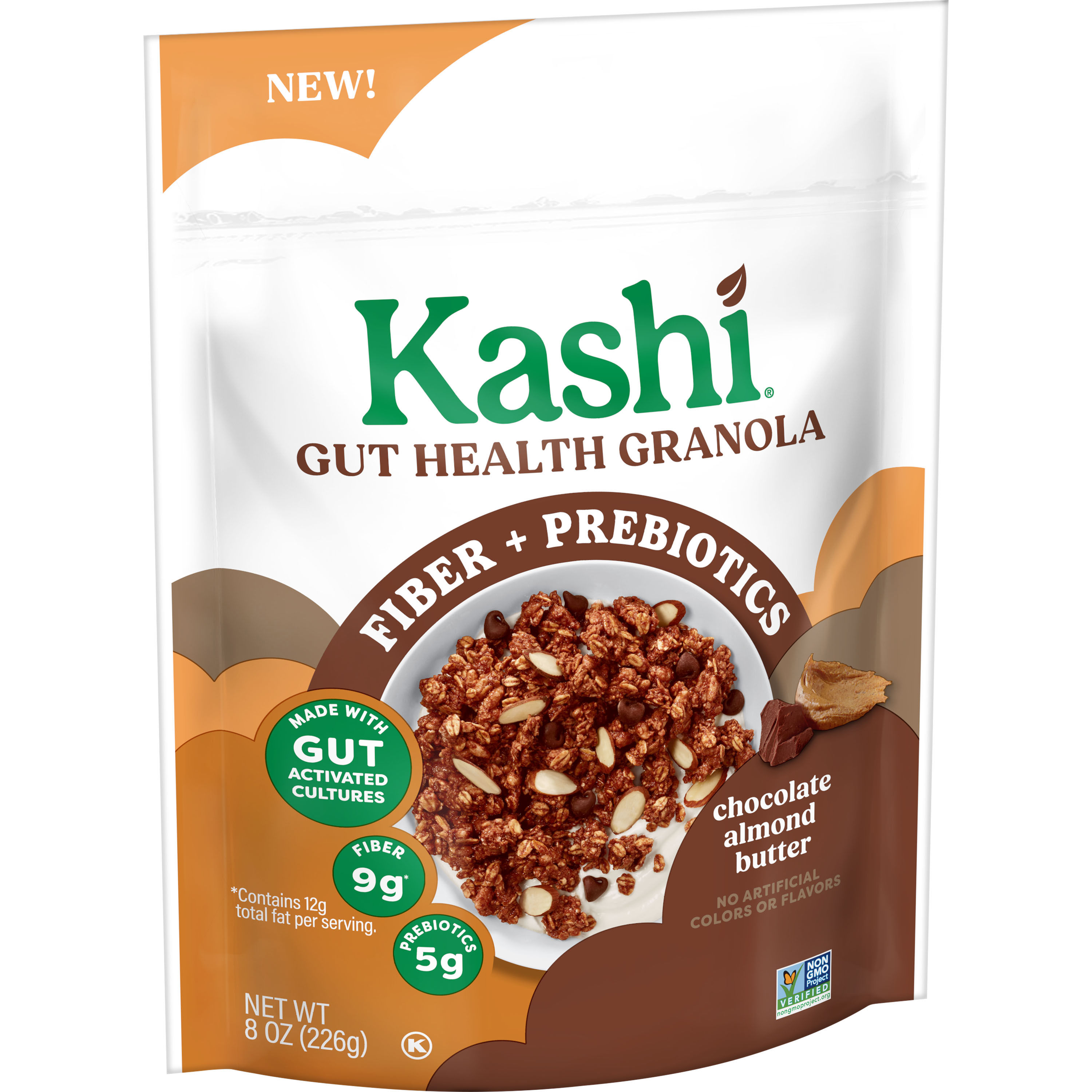
A delicious granola made with a functional blend of ingredients, including whole grain oats, prebiotic chicory root fiber, additional dietary fibers, nuts, seeds, and fruit or chocolate inclusions. Created with prebiotic chicory root and a diverse blend of fibers to support gut health.
Why is gut health important?
Gut health is a multi-factor concept that includes effective digestion and absorption of food, nutrients, and water; stability of the intestinal microbiota; normal immune function, and overall gastrointestinal wellbeing.
Citations:
- Bischoff, S. C. (2011). 'Gut health': a new objective in medicine?. BMC medicine, 9, 1-14. https://doi.org/10.1186/1741-7015-9-24
- Caffrey, E. B., Perelman, D., Ward, C. P., Sonnenburg, E. D., Gardner, C. D., & Sonnenburg, J. L. (2025). Unpacking food fermentation: Clinically relevant tools for fermented food identification and consumption. Advances in Nutrition, 100412.
- Holscher, H. D., Chumpitazi, B. P., Dahl, W. J., Fahey Jr, G. C., Liska, D. J., Slavin, J. L., & Verbeke, K. (2022). Perspective: assessing tolerance to nondigestible carbohydrate consumption. Advances in Nutrition, 13(6), 2084-2097.
- https://isappscience.org/resource/understanding-gut-health/
What is the gut microbiome?
The gut microbiome is a huge collection of tiny living things— including bacteria—that live in your digestive system. Imagine your gut is like a busy city, and the microbiome is made up of millions of microscopic citizens. Each one has a job to do, and together they are important to your body.
What are gut activated cultures?
Bacillus subtilis DE111, the gut-activated culture found in Kashi Gut Health Granola, is an example of a gut activated culture as it is a bacterial culture designed to remain stable under external conditions until they reach an environment ripe for growth, such as your gut where they become “active” and germinate in the gastrointestinal tract. There they become present as part of the gut microbiota and can help contribute to microbiota diversity within the gut.
Citations:
- Colom, J., Freitas, D., Simon, A., Brodkorb, A., Buckley, M., Deaton, J., & Winger, A. M. (2021). Presence and germination of the probiotic Bacillus subtilis DE111® in the human small intestinal tract: a randomized, crossover, double-blind, and placebo-controlled study. Frontiers in microbiology, 12, 715863.
What is prebiotic fiber?
Prebiotic fiber is a type of fiber that feeds the good bacteria living in your gut.
What’s the difference between prebiotic fiber and fiber?
All prebiotics are fiber, but not all fibers are prebiotics. Fiber serves many different purposes in the body depending on the type of fiber. Prebiotic fiber helps to increase levels of beneficial bacteria in your gut.
What are the benefits of fiber?
U.S. and Canada dietary guidance recommends fiber-rich foods and dietary patterns. Fiber is a food source for the trillions of good gut microbes. Per the Dietary Guidelines for Americans 2025-2030 “your gut contains trillions of bacteria and other microorganisms called the microbiome. A healthy diet supports a well-balanced microbiome and healthy digestion. High-fiber foods support a diverse microbiome, which may be beneficial for health.”
Only 6% of Americans 1 year and older meet or exceed the current recommended fiber intake. Fiber comes from a variety of food sources in the diet and diversity is important. Different fibers have different characteristics and offer different health benefits. Having a variety of fibers can provide the full spectrum of benefits.
Inulin is a fiber that is found in a variety of foods, including onions, garlic and wheat, but is commonly isolated from chicory root. Inulin is a commonly used prebiotic fiber that increases beneficial gut bacteria.
Kashi Gut Health Granola contains 9g of fiber per 65g serving, providing 33% of your recommended daily fiber intake.
Citations:
- Dietary Guidelines for Americans, 2025–2030
- IOM Dietary Reference Intake US Canada 2005
- Nutrient Reference Values Australia New Zealand 2006
- Dietary Reference Value EFSA 2010
- SACN Carb report UK 2015
- WHO carb report 2023
- DA_Supplement_Food_Category_Sources_Dietary_Fiber
- Scientific Report of the 2025 Dietary Guidelines Advisory Committee: Part D. Chapter 1: Current Dietary Intakes and Prevalence of Nutrition-Related Chronic Health Condition
- WWEIA/NHANES August 2021-August 2023 Data Tables
How much fiber do you need?
The Daily Value for fiber is 28g/day. Depending on gender and age, recommended fiber intake varies from 14-34g/day. The 2025-2030 Dietary Guidelines for Americans (DGAs) recommend prioritizing fiber-rich whole grains. Per the 2020-2025 DGAs, more than 90 percent of women and 97 percent of men do not meet recommended intakes for dietary fiber. A Daily Value is a reference amount of a nutrient that one should aim to consume or not exceed each day. It offers a single standardized value for labeling purposes across the general population.
Citations:
How much fiber is in this food?
Kashi Gut Health Granola Blueberry Almond has 9g total fiber, 6g soluble fiber, 3g insoluble fiber per 64g serving. That is 33% or one-third of your recommended daily fiber intake.
Kashi Gut Health Granola Chocolate Almond Butter has 9g total fiber, 6g soluble fiber, 3g insoluble fiber per 65g serving. That is 33% or one-third of your recommended daily fiber intake.
Citations:
What ingredient is providing prebiotic fiber in this granola?
Chicory root fiber
Does this granola need to be refrigerated?
No, our gut activated culture has a protective shell that keeps it inactive at room temperature. It only becomes active when it reaches the gut, where conditions support its growth.
Is this granola vegan?
Yes
Which granola ingredients provide the most fiber?
Chicory root fiber provides 5 grams of prebiotic fiber in Kashi Gut Health Granola. The majority of fiber comes from the prebiotic chicory root fiber and then whole grain oats. Other ingredients, like almonds, blueberries, rice crisp, oat bran, flaxseeds, amaranth, and cocoa powder provide the rest.
Breakdown per serving:
• 5g chicory root fiber
• Approximately 2-3g whole grain oats
• Remaining 1-2g from combination of the rest of the listed ingredients that contain fiber as mentioned above.
How can granola or cereal contribute to fiber and overall nutrition in a balanced diet?
Cereal and granola are easy to prepare and contribute to a healthy dietary pattern by helping consumers get fiber, whole grains, micronutrients and/or protein, as well as driving intake of key food groups like dairy and fruit. Kashi Gut Health Granola provides 9g total fiber per serving, which is 33% of the recommended daily fiber intake, including 5g prebiotic fiber from chicory root fiber.
What makes a cereal or granola supportive of gut health?
Gut health is a multi-factor concept that includes effective digestion and absorption of food, nutrients, and water; stability of the intestinal microbiota, and overall gastrointestinal wellbeing. There are many ways a cereal or granola can impact gut health depending on the food composition, ingredients, nutrients, etc. Our Kashi Gut Health Granola supports gut health by providing prebiotic chicory root fiber which helps increase beneficial bacteria in the gut microbiota.
Total dietary fiber intake has been associated with gut health benefits. The following recent review summarizes the literature on total fiber intake and laxation, a well-established gut health benefit, among health adults: Fiber intake and laxation in people with normal bowel function: a systematic review
Citations:
- The American Journal of Clinical Nutrition
- The Prebiotic Potential of Inulin-Type Fructans: A Systematic Review - PMC
- Fiber intake and laxation in people with normal bowel function: a systematic review - The American Journal of Clinical Nutrition
- 'Gut health': a new objective in medicine? | BMC Medicine | Springer Nature Link
What makes a granola nutritious?
A nutritious granola is distinguished by the nutrients and ingredients it provides - especially fiber, prebiotic fiber, whole grains, nuts, seeds, and fruit.
Kashi Gut Health Granola provides 9g total fiber per serving, including 5g prebiotic fiber from chicory root fiber, which is 33% of the recommended daily fiber intake. Its fiber comes mainly from chicory root fiber and whole grain oats, with additional nutrition from ingredients like almonds, blueberries, oat bran, flaxseeds, amaranth, rice crisp, and cocoa powder, depending on the flavor.
Kashi Gut Health Granola is a granola that balances great taste, satisfying crunch, whole grain ingredients, and meaningful fiber benefits.
Citations:
What makes a great‑tasting granola, and which flavors are most popular?
A great-tasting granola is one that wins on flavor and reinforces that experience through texture, sweetness balance, and how it’s meant to be eaten.
Taste drivers and the elements that make a great-tasting granola are baked/caramelized grain notes, optimal sweetness and salt levels, roasted and/or nutty notes, flavor development throughout the chew, and the addition of inclusions such as nuts, seeds, fruits or chocolate chips. Kashi Gut Health Granola comes in popular flavors including blueberry almond and chocolate almond butter, to provide people with delicious granolas in the flavors they love.
Citations:
- https://www.dvo.com/newsletter/weekly/2023/10-20-372/cooknart4.html
- Hot and Cold Cereal – US – 2025 - Mintel
- Circana Total US Mulo+ 52 weeks 4/26/2026
How does Kashi approach product innovation in cereal and granola?
Kashi cereal and granola products are developed using consumer research and concept testing to understand consumer-desired attributes and benefits like protein, fiber, gut health, and sugar ranges. Concepts are evaluated through consumer testing to assess brand fit and consumer liking to inform development. At the inception of the development is a robust and comprehensive understanding of four fundamental questions:
1) Who is this cereal or granola for?
2) What do they want from their cereal or granola?
3) What qualities of the food will bring these consumer needs to life?
4) Which ingredients help achieve that experience?
From there, insights, development and consumer feedback shape and refine the final food experience.
What consumer insights informed the development of Kashi Gut Health Granola?
Kashi Gut Health Granola reflects the priority that many people place on their overall wellness, including gut health, that shows up across diet motivations, food expectations, and supplement usage.
People connect gut health to whole body wellness, not just digestion.
Its sought-after benefit in everyday foods-especially snacks: When buying snacks, 77.9% say "offers functional benefits (e.g. energy, gut health)" is important, including 37.35% who say it's "very important."
Citations: